
October 2022 heralded a new chapter for inclusive design with the publication of ‘Design for the mind – Neurodiversity and the built environment’.
This first ever BSI advisory publication on neurodiversity broadened the concept of inclusive design by reflecting the needs of people who experience sensory and neurological processing difficulties and/or differences.
Developed by a steering group of experts in the built environment including many with lived experience of one or more aspects of neurodiversity, the guide provides advice around areas such as:
- Lighting
- Acoustics
- Flooring
- Décor
- Wayfinding
- Surface finishes
- Temperature
- Access to green spaces
At the time of its publication, one of our main concerns was that although Design for the mind provides good practice guidelines on how to make public spaces more inclusive for people who experience sensory or neurological processing differences, as a Publicly Available Specification (PAS), those standards don’t legally need to be implemented.
This raises the interesting question of whether it has actually been used successfully over the last two years. We take a look.
What progress has been made
Although Design for the mind is very much a nice to do, rather than a must, the positive news is some companies have whole-heartedly embraced the standard.
When it was first launched both the BBC and Google had already started making changes to factor in neurodiverse requirements. Since then, Google has introduced a subdivision to their Disability Alliance for neurodivergent individuals to help boost their representation. This has raised awareness around existing barriers and helped create an environment where neurodivergent individuals feel empowered.
As for the BBC, their CAPE programme continues to promote acceptance and appreciation of neurodiversity which includes a whole host of useful resources including this ‘Sensory Environment Checklist’.
Meanwhile, Transport for London (TFL), who were a sponsor of the standard, have committed to:
- Using the PAS to inform their built environment decisions and develop a plan to embed the guidance in organisational practice by 2024
- Completing an audit by 2026 to identify problematic stations for neurodivergent customers and complete a pilot to make improvements based on principles of Design for the Mind
It’s not completely clear whether they made the 2024 deadline, but at least it’s one of their key priorities in breaking down unfair barriers to travel.
But probably the most significant success story is the RNIB’s new London Hub, The Grimaldi Building.
Officially opened in June last year, the goal was to make their new headquarters a ‘beacon of accessibility’ and to offer a flexible and accessible facility for customers, patients, volunteers and staff. As well as meeting all current good practice for accessibility and inclusion, it’s also the first building in the UK to fully adopt Design for the mind.
Key features include:
- Visually contrasting floors, walls and furniture
- Fully controllable lighting in terms of both intensity and colour temperature
- Zoned areas for quieter and collaborative work
- Serenity room for recovery from stress or sensory overload.
The Grimaldi Building pioneers neurodiversity-conscious design and has successfully created a truly inclusive and accessible space for all.
How can other companies follow suit?
We would encourage everyone to read the guidance, especially if you are planning any refurbishment work. It’s not difficult to understand, and you’ll discover there are a number of relatively small and simple adjustments you could make to your environment, which would make a world of difference. These include:
- Consider natural light options, flexible including dimmable lighting
- Reduce noise by using sound-absorbing materials
- Choose soft and gentle textures to avoid sensory overload
- Use calming colours
- Avoid excessively stimulating patterns
- Don’t use strong or unusual scents
- Avoid jargon
- Use clear and consistent signage with easy-to-read fonts
- Provide quiet rooms
- Design spaces with easy navigation.
Approximately 15-20% of the UK population are neurodivergent, so these adjustments would make a significant difference to more than 13 million people. Isn’t that reason enough to take on board these recommendations?
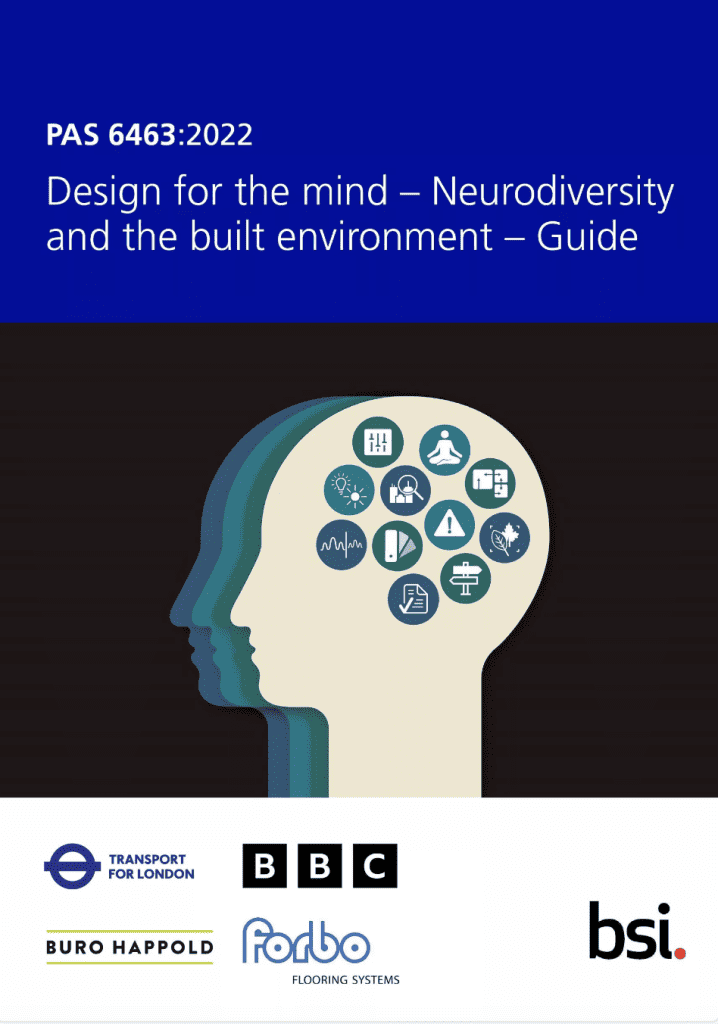
PSA 6435 – Design for the mind – Neurodiversity and the built environment is available from BSI Group.