
“No, we don’t have a ramp. Try the shop down the road.”
“Nobody else has complained about our coir matting. You don’t know what you’re talking about”.
No one should feel unwelcome when they go shopping. Yet, for millions of disabled people, experiences like these are an everyday reality. Physical, digital and social barriers make what should be a routine activity an exhausting experience that requires meticulous planning and exacts a devastating emotional toll.
It’s why we welcome Re-Imagining Retail, the new research project from the Research Institute for Disabled Consumers (RiDC).
The project doesn’t just expose the numerous barriers disabled shoppers face both on the high street and online, it shows retailers exactly how to address them and asks what would happen if accessibility was considered as a founding principle rather than as an optional extra?
What’s the overall goal of the Re-Imagining Retail project?
“Shopping is a necessary function in life. But it can also be an enjoyable, social, positive and happy experience. … When shops and high streets are completely inaccessible you feel excluded…”
RiDC panel member
Launched in 2024, the Re-Imagining Retail project worked closely with both disabled consumers and retailers, and used surveys and interviews to provide real-world insights into how inaccessible the world of retail can be.
The goal of the project was to raise awareness of the common barriers disabled consumers face when shopping in physical retail stores and online, and to provide the retail industry with practical solutions to improve accessibility.
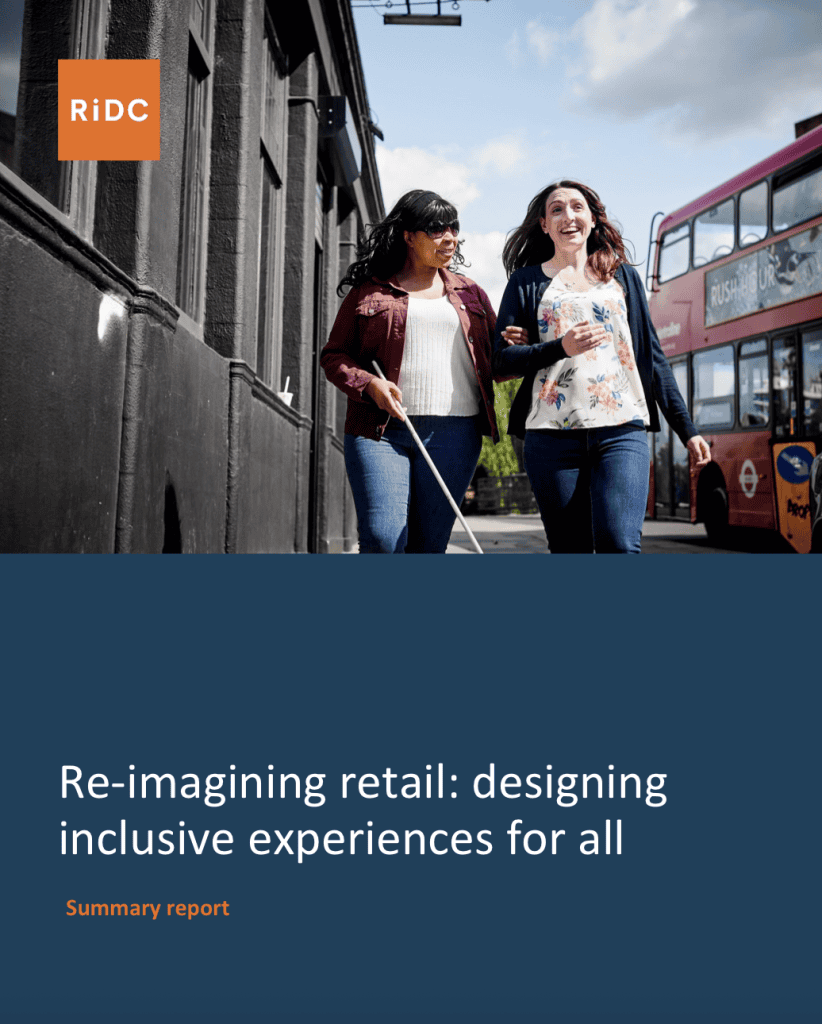
The devastating impact of common, everyday barriers
“74% of respondents said they felt less valued because of inaccessibility”
For many people popping to the shops is something they take for granted, but for many disabled consumers it’s a completely different experience. As the report identifies they face barriers at every stage of the shopping experience.
- Doorways or entrances which are too narrow or difficult to open or access
- Aisles that are too narrow or too cluttered to navigate easily
- Lack of clear signage
- Product displays which are placed too high or too low or behind heavy doors
- Stores frequently changing their store layout
- Lack of available places to sit and rest
- Lack of medical rooms or changing places toilets
- Loud announcements and music playing
- Stores which are too bright or too dark.
And that’s before we even mention the lack of available staff or staff showing a woeful lack of disability awareness and understanding.
No wonder 66% of respondents said they changed their shopping habits because of inaccessible stores, and either avoided certain stores altogether or opted to shop online.
And while shopping online was found to pose fewer barriers than in-store experiences, 86% of online-shoppers still experienced at least one barrier, including websites not being compatible with assistive technologies, missing product information and inaccessible customer service channels.
But, as this report highlights, these barriers aren’t just about lost sales, they’re about how they make disabled people feel.
“It just feels like every time you hit a barrier, you’re reminded you’re a problem.”
RiDC panel member
As well as undermining independence and eroding confidence, inaccessible retail deepens social isolation, reshapes behaviours and, ultimately, exacts a devastating emotional toll.
Translating lived experience into a blueprint for change
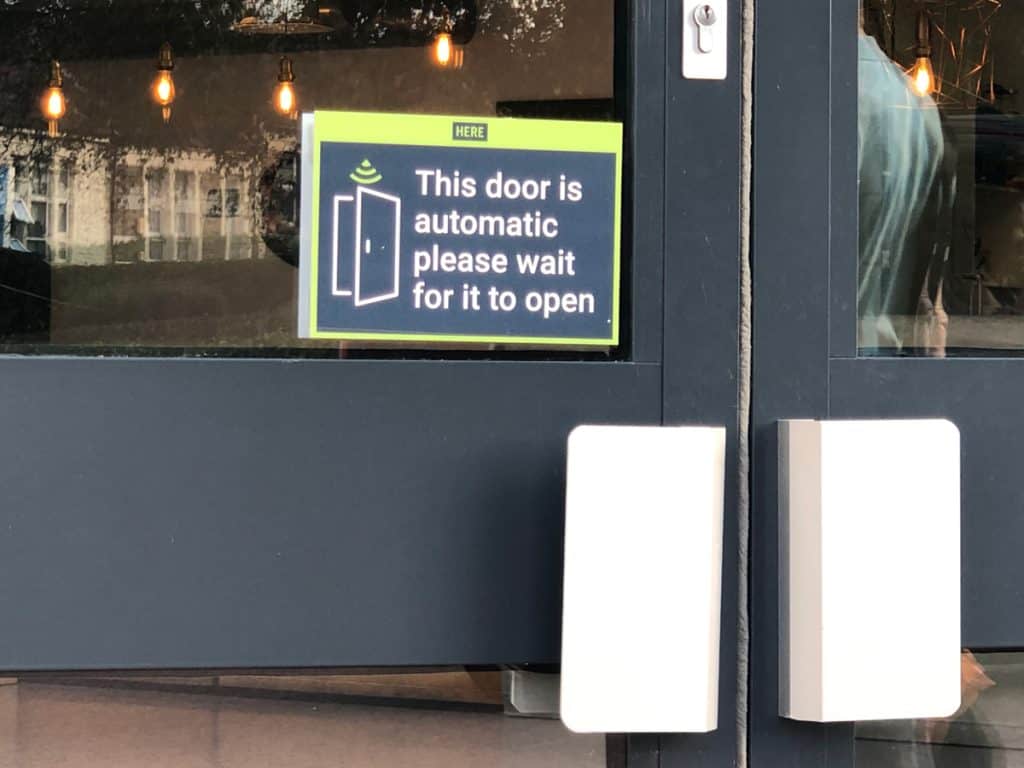
“53% of disabled respondents sharing that current accessibility options are often ineffective or poorly designed.”
What makes this project truly stand out is that it was developed in partnership with disabled people, which ensures the findings and advice is grounded in real lived experience, not baseless assumptions.
This is reflected in the fact that the project doesn’t just focus on obvious accessibility barriers such as steps or automatic doors, but looks at more subtle ones, such as sightlines, signage and circulation, which might otherwise have been overlooked.
It also highlights the cumulative impact of barriers. Narrow aisles, poor signage, harsh lighting – all barriers on their own, but when grouped together become more than a mere inconvenience, they actively exclude.
But maybe the biggest strength of this project is that it bridges the gap between “knowing there’s a problem” and “knowing what to do about it”.
The Accessibility Guidelines included in this project don’t just talk about the barriers and their impact, but offer retailers tangible, actionable solutions, that reflect best practice and, crucially, what is most important to disabled consumers.
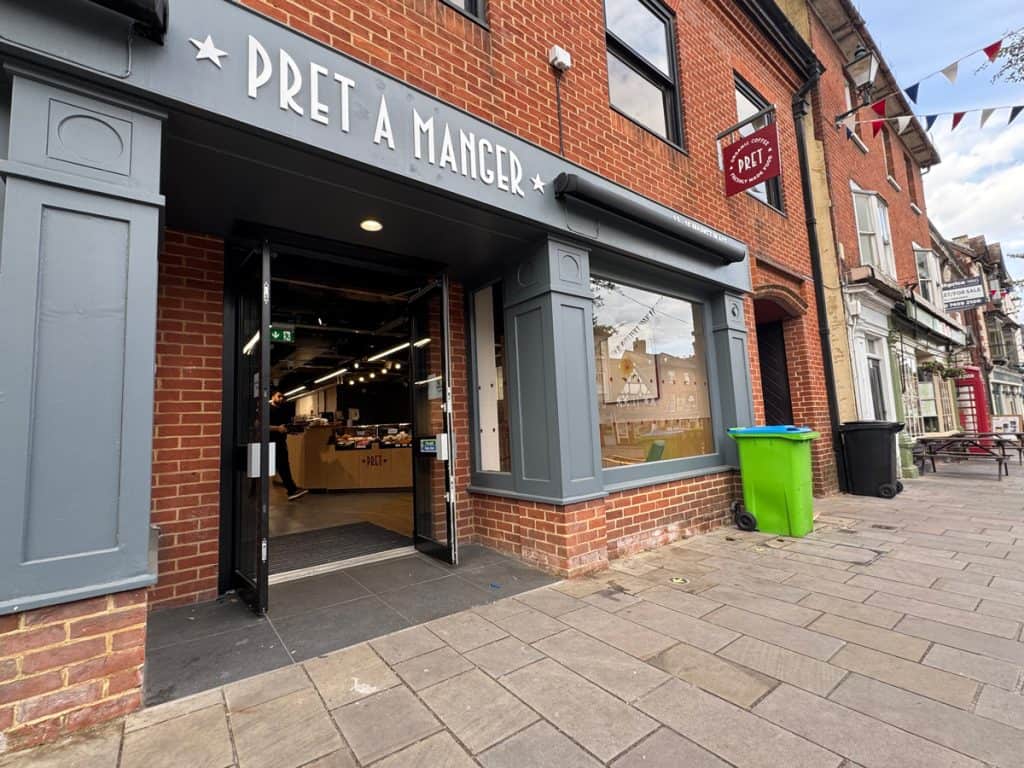
and the right type of matting
Why retailers can’t afford to ignore this project
“…whoever leads the way in all of this will reap the financial and popularity rewards, as there are around 16.1 million people in the UK with some form of disability. That’s a lot of revenue for businesses to ignore.” RiDC panel member
Accessibility is not a ‘nice-to-have’. It’s a business essential.
- 54% of people have abandoned a shopping trip due to poor access
- 61% avoid a particular store because of barriers they’ve experienced in the past
- The UK economy loses an estimated £2 billion each month, because of inaccessibility.
The opportunity is clear: embracing accessibility in every aspect of the retail journey means more customers, higher loyalty and increased profits.
But this isn’t just an economic issue – it’s also a human one.
- 57% said they felt more isolated because they couldn’t shop in-person when and how they wanted.
- 57% said inaccessible retail negatively impacted their mental and physical health.
And maybe that’s the real takeaway for retailers. Retail accessibility isn’t just about buying stuff, it’s about quality of life, or as a RiDC panel member puts it,
“…it’s about dignity, inclusion, autonomy and belonging.”
The truth is nobody should have to resort to bringing a discrimination case against a store for changes to happen. It’s what Flick Williams had to do when she was frustrated by the lack of accessibility in Marks & Spencer (M&S), who have subsequently “committed to making our stores accessible to all our customers”. But disabled people shouldn’t have to fight for what should already be a given.
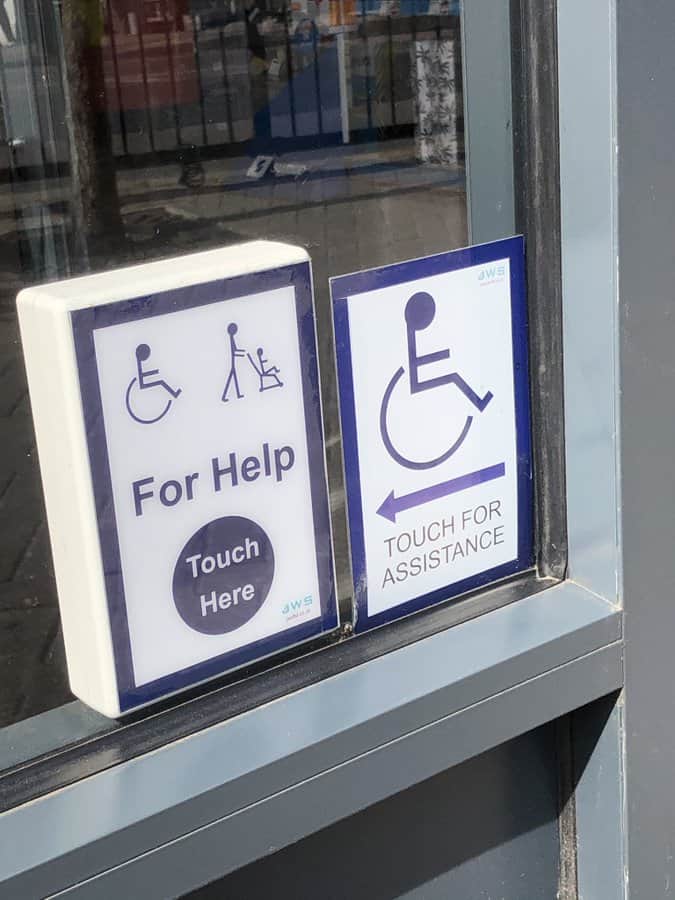
So, how do retailers design for inclusion?
“Accessible shopping would make a huge difference to how disabled people
feel about their place in society.” RiDC panel member
Exclusion in retail isn’t inevitable, it’s designed, which means inclusion can also be designed. And this report offers a blueprint for doing just that.
But maybe one of the biggest barriers is mindset. Accessibility shouldn’t be seen as an add-on. It shouldn’t be seen as a tick-box exercise, or something to do only after somebody complains.
Accessibility is about creating an inclusive environment which works for everyone. It’s about ensuring the smallest number of people are treated differently and providing for the needs and desires of everyone. Yes, those modifications might be an inconvenience, but ultimately, they will benefit all customers.
And if there are two key takeaways from the report, we hope retailers will take note of, it would be these:
- Embed accessibility from the start not as an afterthought
Design shops and websites with disabled consumers from the beginning, treating accessibility as a core business principle, not a compliance issue or an optional extra. - Work with disabled people
Partner directly with disabled consumers to identify barriers, test improvements, and measure progress to ensure solutions are practical and grounded in lived experience.
Accessibility isn’t a niche issue; it’s the future of retail. And Re-Imagining Retail shows how to get there.